For Those Who Think in Generations: The Case for Panama’s Private Islands
For Those Who Think in Generations: The Case for Panama’s Private Islands
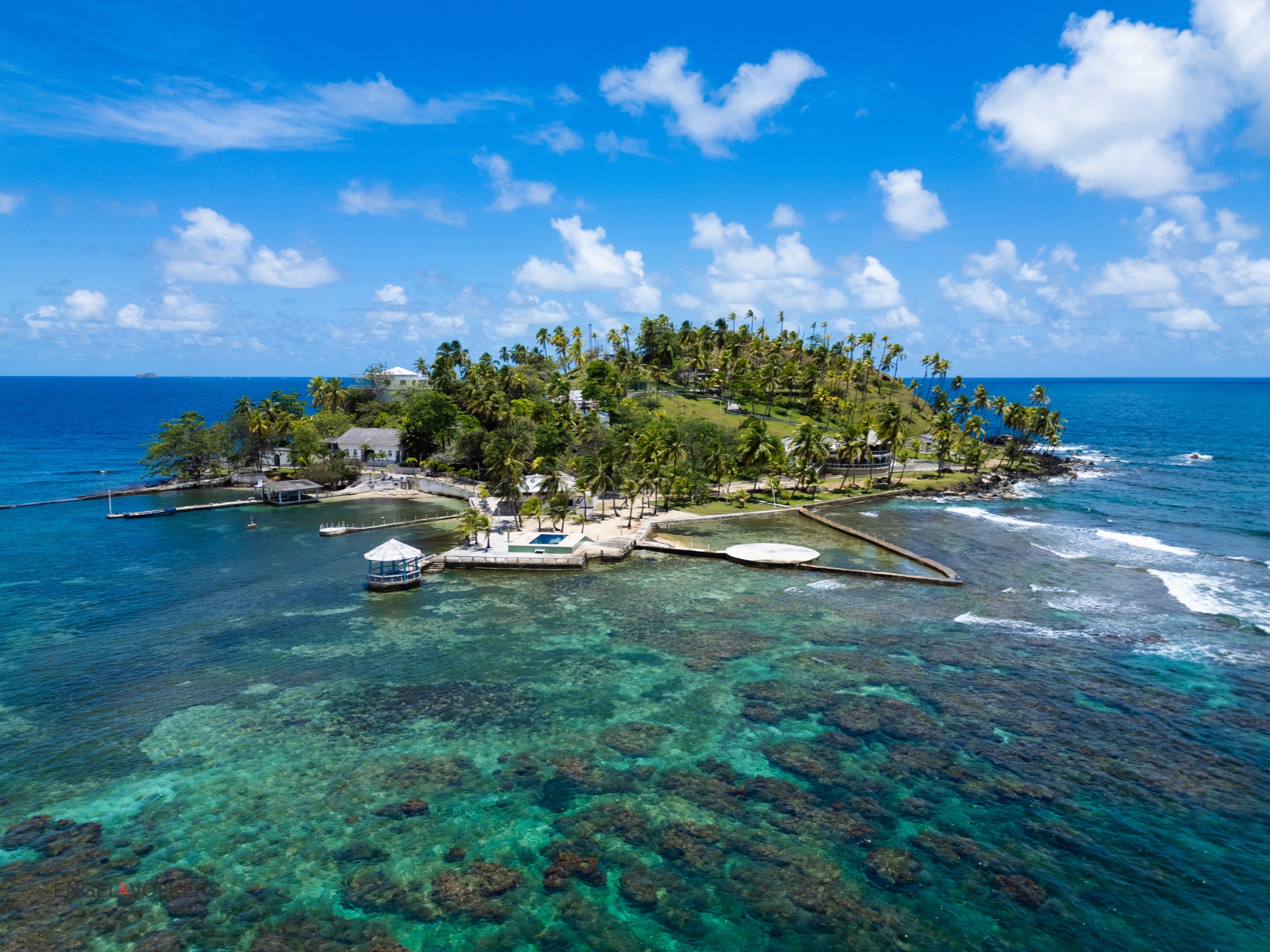
The most discerning buyers in the world are looking for something that can't be manufactured or replicated. Clean air. Intact ecosystems. Political stability. Real legal title. Undervalued land. There are very few places left where all of that exists in one jurisdiction. Panama is one of them.
I'm a Private Island Specialist at Engel & Völkers Panama, and I work with a curated portfolio of private island listings across the Pacific and Caribbean coasts. Beyond that, I also work with a broader range of public and private listings—because Panama's real estate landscape is far richer than what ever makes it onto a website.
For anyone thinking seriously about where to invest, develop, or plant roots at the highest level — Panama makes an argument that's difficult to ignore, and even harder to find anywhere else.
The air is among the cleanest on earth. According to IQAir's 2025 World Air Quality Report, Panama is one of only 13 countries globally — out of 143 measured — to meet the WHO annual air quality guideline. 91% of countries fail this benchmark. Panama passes it. On the islands, where there are no highways and no industry, the air is cleaner still.
Panama is one of only three carbon-negative countries in the world. Over 65% of the country is forested, and those forests absorb more CO₂ than Panama's entire population produces. The average Panamanian generates 2.59 tonnes of carbon per year — against a global average of 4.76 and a US average of around 14. This isn't an aspiration or a policy target. It's the current reality, and Panama has formally committed to maintaining it through 2050.
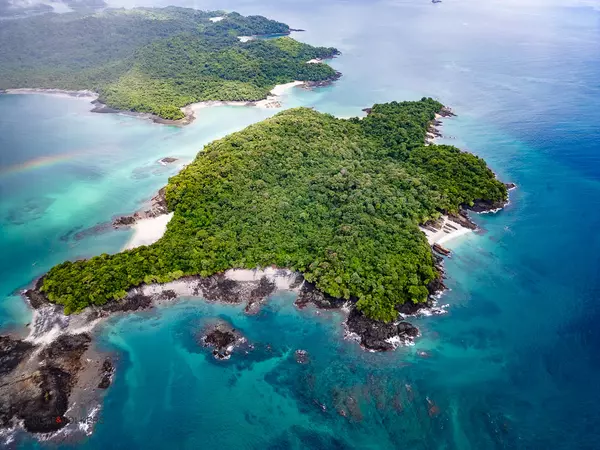
The biodiversity is protected, not just promoted. Panama sits at the heart of the Eastern Tropical Pacific Marine Corridor — one of the most ecologically intact ocean systems on the planet. The Pearl Islands hold a Mission Blue Hope Spot designation. Coiba National Park, a UNESCO World Heritage Site, protects the second-largest coral reef in the Eastern Pacific. Panama has five UNESCO World Heritage Sites in total — three natural, two cultural. These aren't talking points. They're enshrined in international law.
Getting here is easier than most people expect. Tocumen connects directly to 91 destinations worldwide across 37 airlines — the busiest international hub in Latin America. Clients arrive direct, without losing days in transit.
Full dollarization eliminates currency risk from day one. Transactions close in USD, returns are held in USD, and there's no exchange rate to erode your yield over time.
The backbone isn't tourism sentiment — it's the Canal. Over $4 billion in annual toll revenue flows through a strategic chokepoint that global trade cannot route around. That's a sovereign-grade anchor, not a hospitality cycle.
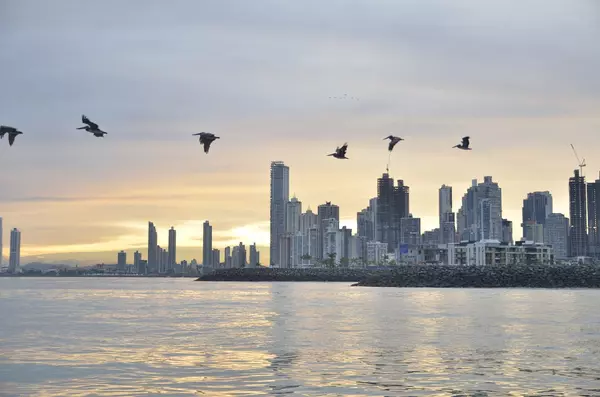
Layer on top: Panama City is Latin America's financial hub — home to over 80 international banks, a regional headquarters cluster for multinationals, and one of the hemisphere's most open capital account regimes. Capital moves freely in and moves freely out.
Stability here is structural, not seasonal.
Foreign buyers hold title directly. No restrictions, no workarounds. Clean ownership in one of the most legally transparent markets in the region.
The wellness real estate market is a $876 billion industry growing at 23% year over year. The buyers I work with aren't chasing a trophy asset. They're looking for an environment that actively supports how they want to live — clean air, intact ecosystems, access to nature, and the infrastructure to reach it without friction.
Panama delivers all of it.
If private island acquisitions or broader real estate opportunities in this market belong in your next conversation, I'd like to be part of it.
Tina M. Punjabi
Lic. PN 4886
Categories
Recent Posts